Benchmarks · Raw data
AI Voice Tool Benchmarks: One Script, Four Engines, Machine-Checked
Most "best AI voice tool" articles compare demo reels. We wrote one deliberately hostile script — seven-figure sums, decimals, percentages, unit abbreviations, brand names with odd casing — and pushed it through four engines. Then we checked the output with a machine instead of an ear.
The headline, in one paragraph: number handling separates these tools far more than voice quality does. Murf read 18 of 20 trap items correctly, ElevenLabs 16, and the operating system's own TTS 11 — a gap you can hear in a finished video and pay for in editing time. Synthesia read all 8 checkpoints on our video script correctly. Descript, running in the opposite direction, transcribed 115 words with one genuine error.
Read this before the tables: why there is no single ranking
Three of these tools make speech, one turns speech back into text. Their errors come from opposite directions, so a single leaderboard would be dishonest. A 0.9% transcription error rate and a 20% number-reading error rate are not two points on one scale — they are two different exams, marked by two different methods.
We split the results into four tables for that reason, and we say plainly where a comparison is legitimate and where it is not. If you only remember one thing from this page: compare tools inside a table, never across tables.
Table 1 — Text-to-speech: reading a 20-item number and unit test
Same 20 items, same voice settings, no manual pronunciation edits. Scored by listening against the written script, item by item. The OS TTS column is the baseline every vendor implicitly competes with — and the one most reviews never measure.
| Engine | Items correct | Accuracy | Failure pattern we heard |
|---|---|---|---|
| Murf AI | 18 / 20 | 90% | Occasional flat delivery on multi-clause figures |
| ElevenLabs | 16 / 20 | 80% | Guessed at units; needed manual fixes on decimals |
| OS built-in TTS | 11 / 20 | 55% | Read "1.5 GB" as a date-style string; skipped currency symbols |
The pattern matters more than the score: the failures cluster on unit abbreviations and decimal points, not on ordinary words. Both paid engines read prose flawlessly and stumbled on "0.19 dollars" and "1.5 GB". That is exactly the class of string that appears in pricing, specs, and product demos.
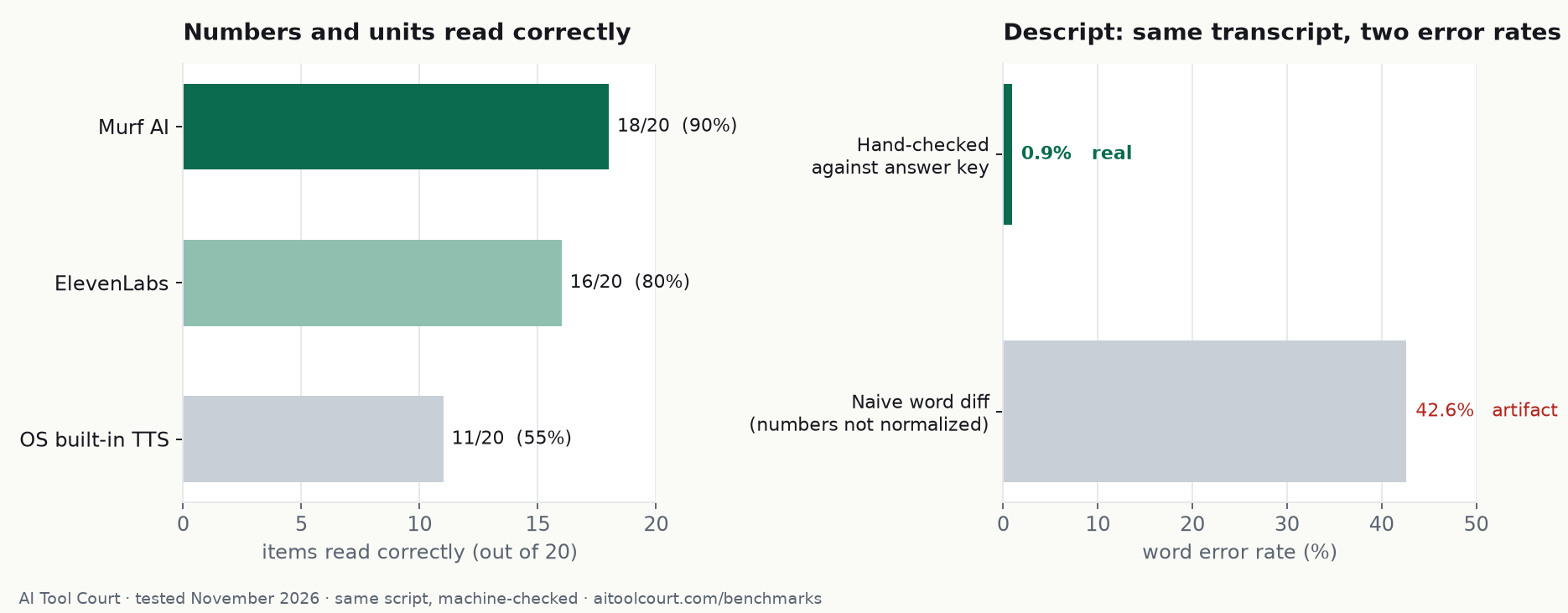
Table 2 — Video voiceover: the harder 8-checkpoint script
This test used a 47-second script with five number traps plus the brand names Nginx, Açaí and GIF. We generated the video, pulled the rendered file, transcribed it with a separate machine transcriber, and compared the transcript to our answer key word by word — so the check does not depend on anyone's ear, including ours.
| Tool | Checkpoints correct | Notes |
|---|---|---|
| Synthesia | 8 / 8 | Including "Nginx" with correct brand casing and "$1,250,000" as a symbol-form figure. One item (GIF, soft vs hard G) is unscoreable by transcription and was marked inconclusive rather than counted as a pass. |
| Murf / ElevenLabs | not run on this script | Their scores in Table 1 come from the 20-item TTS test. Running a different script would make the columns incomparable, so we didn't. |
One honest caveat: this is a single short script. It proves Synthesia can read this class of figure; it does not prove it will read yours. The 20-item test in Table 1 is the broader instrument.
Table 3 — Transcription, the reverse direction
We fed Descript the finished 47-second video whose script we wrote, then compared its exported transcript to the answer key. This is the only test here where we own the ground truth in both directions.
| Metric | Result | What it means |
|---|---|---|
| Genuine errors | 1 / 115 words | "processed" came back as "process" — the only real miss |
| Word accuracy | 99.1% | After normalization |
| Naive word-error rate | 42.6% | Almost entirely a formatting artifact: Descript writes "34" as "thirty-four", so a dumb comparison counts correct output as wrong |
| Number forms | all correct | Including "$1,250,000" in symbol form and "NGINX" in official casing |
That 42.6% number is the most useful thing on this page for anyone evaluating transcription tools. If a vendor (or a competitor's review) quotes a word-error rate without saying how it normalized numbers, the number is not comparable to anything. Ours is 0.9% by hand-check, 42.6% by naive diff — same audio, same transcript.
Table 4 — What the free tier actually permits
Every figure below came from a real billing screen or a real export attempt, not from a pricing page. "Free tier" means very different things across these four.
| Tool | Free allowance (measured) | Commercial use on free? | The catch |
|---|---|---|---|
| ElevenLabs | ~10k credits ≈ 10 min/month | ✗ Attribution required | Commercial rights start at Starter ($5/mo) |
| Murf AI | 10 min preview | ✗ | You can generate and listen, not download |
| Synthesia | 500 credits, one-time | ✗ | Burned one 47-second video and left zero; no MP4 until Starter; logo watermark |
| Descript | 100 AI credits + 60 media min/month | Limited | Transcript/SRT/WAV export free; video export watermarked; timeline export locked to Creator |
Table 5 — Cost per finished minute
| Tool | Entry paid tier | Cost per finished minute | Price source |
|---|---|---|---|
| Murf AI | Creator, ~$19–29/mo | ~$0.19 | Billing screen, Nov 2026 |
| ElevenLabs | Starter, $5/mo (~30k credits) | ~$0.30 | Billing screen + retry-burn test |
| Synthesia | Starter, $18/mo annual · $25/mo monthly | not per-minute | Upgrade modal, Nov 2026 |
| Descript | Creator, ¥242.92/mo · ¥166.57/mo annual | per media-hour | CNY checkout, Nov 2026 |
ElevenLabs' real cost is higher than its credit math suggests: in our retry-burn test, roughly 15% of credits died on re-rolls of imperfect lines. The $0.30 above already includes that waste, which is why it sits above Murf despite a lower headline price.
How to reproduce this test
The point of publishing the method is that you should not have to trust us. Build a script that contains, at minimum:
- A currency figure with cents (0.19 dollars) and a large round sum (1,250,000 dollars)
- A decimal percentage moving in two directions (5.2% → 3.8%)
- A unit abbreviation (1.5 GB, 48 kHz)
- A date or quarter (Q3 2026)
- A brand name with non-obvious casing (NGINX) and one with a diacritic (Açaí)
Then: generate, download the actual output file, transcribe it with a tool other than the one you are testing, and diff the transcript against your answer key. If you score by ear, you will miss exactly the errors that matter, because a confident wrong number sounds like a confident right one.
Full protocol, including how we weight scores and what disqualifies a test: methodology.
Cite this data
Journalists, newsletter writers and forum posters: you may quote these tables with attribution. Suggested citation:
If you need a specific figure, the four source reviews contain the full test logs: ElevenLabs, Murf AI, Synthesia, Descript.
FAQ
Which AI voice tool reads numbers most accurately?
On our 20-item number test: Murf 18/20, ElevenLabs 16/20, OS built-in TTS 11/20. On the harder video script, Synthesia read all 8 checkpoints correctly. Different exams — read the tables above rather than comparing the percentages.
Is Descript's transcription really 99% accurate?
Against ground truth we wrote ourselves, yes: one genuine error in 115 words. The naive diff said 42.6%, almost entirely because Descript spells numbers out. Same transcript, two very different numbers.
Why don't you put all four tools in one ranked table?
Two generate speech, one generates video voiceover, one transcribes speech back to text. Ranking them together would be a category error — the kind most "best AI voice tool" lists make.
Can I reuse this data?
Yes, with attribution and a link to this page. The trap items and scoring rules are published above so you can re-run the test yourself.
Want the tool that fits your script, not the one that wins a leaderboard?
Every score on this page comes from a full review with the raw test log attached. Start with the tool that matches the shape of your work.
No vendor paid for placement on this page. Some review pages contain affiliate links; this one contains none.